
Could you defend your landlord’s decision to refuse a pet?
“Can I keep a cat?”
It sounds like one of the simplest questions a tenant can ask. However, for one landlord, that question became an early test of the Renters’ Rights Act’s new approach to pets in rented homes.
And it should make letting agents and landlords rethink what could happen if they refuse a request, or try to attach conditions that aren’t allowed under the legislation.
What happens if a tenant challenges the decision? And if landlords can no longer rely on blanket “no pets” policies, how can they protect their property from the very real risks that concern them most?
What one cat can teach us about pet requests
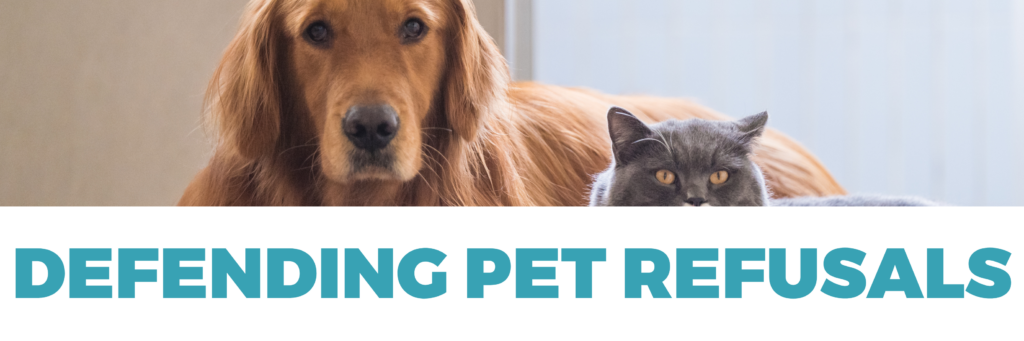
One of the early reported examples of how pet requests are being misunderstood under the Renters’ Rights Act didn’t involve a dangerous dog or an exotic animal. It involved a domestic cat called Marshy.
The tenant, who lived in a one-bedroom flat, asked her landlord for permission to move her furry friend in with her. However, the request was refused on the grounds that the property was unsuitable for a pet.
Rather than accepting the decision, the tenant sought support from AdvoCATS, a charity that helps renters understand their rights around pet ownership.
The charity helped the tenant understand how the new pet provisions are intended to operate, and why broad concerns about the size of a property, without considering the individual circumstances of the animal, may not be enough to justify a refusal.
Following the challenge, the letting agent agreed to grant permission for the cat. However, the agreement came with conditions.
The tenant was told she would need to take out pet damage insurance and arrange for the property to be professionally cleaned at the end of the tenancy, using the landlord’s chosen contractor.
But the tenant challenged those conditions too, arguing that they were inconsistent with the rules.
The case attracted attention because it highlights some important questions for agents and landlords. When can a pet request reasonably be refused? What conditions can legitimately be attached to granting permission? And how can landlords protect themselves against the risks that concern them most?
For landlords, the story may reinforce concerns that the Act means they are losing the ability to decide what happens inside their own property. Meanwhile, for tenant groups, it represents an important step towards giving responsible renters greater freedom to enjoy family life with pets.
Whichever side of the debate you sit on, one thing is clear: pet requests are no longer simply a matter of preference. They’re a compliance issue.
A pet request is now a risk assessment exercise
For years, many landlords adopted a straightforward “no pets” approach. It reduced uncertainty, protected the property and avoided difficult conversations that could arise later in a tenancy.
However, the Renters’ Rights Act has changed that approach.
Since May 2026, tenants with assured tenancies in England have had a statutory right to request permission to keep a pet. Landlords must consider requests reasonably and cannot simply refuse because they don’t like the idea of animals in their property.
Requests must be made in writing, and landlords will generally have 28 days to respond, although there are circumstances where this period can be extended.
Rather than simply refusing a request, landlords are expected to consider each application on its own merits and, where permission is refused, be able to demonstrate that their reasons are reasonable.
Broad concerns about potential damage or general policies against pets aren’t enough to justify refusing every request.
Instead, the decision should be evidence-based and fair, rather than assumption-based.
For agents, that means helping landlords move away from blanket policies and towards well-reasoned, well-documented decision-making.
Are landlords worried about the pet, or are they worried about the damage?
One of the messages to emerge from the Marshy case is that the debate isn’t really about cats or dogs. It’s about the risk of damage.
Landlords worry about scratched flooring, damaged doors, stained carpets, chewed skirting boards, unpleasant odours and expensive cleaning bills.
They worry about complaints from neighbours, damage to communal areas and the possibility of lengthy disputes at the end of a tenancy. These concerns are entirely understandable.
The challenge is that the legislation doesn’t remove those risks. Instead, it changes how landlords are expected to manage them.
That’s where letting agents can add significant value.
Agents can help landlords make informed decisions by ensuring they have a clear understanding of the tenant and the particular animal involved.
Comprehensive referencing, affordability assessments, identity verification and previous landlord references all help paint a picture of the person behind the application.
While good referencing can’t guarantee that a pet won’t cause damage, a positive tenancy history can provide some reassurance about how responsibly an applicant has managed their previous home.
The question becomes less about whether the landlord likes pets and more about whether there are reasonable grounds to refuse this particular request.
Protect the property, not just the decision
The Marshy case also prompted questions about the conditions landlords can attach to granting permission.
Under the Renters’ Rights Act, landlords cannot require tenants to purchase pet damage insurance as a condition of allowing a pet.
Likewise, requiring a tenant to use a particular professional cleaning contractor at the end of the tenancy may conflict with the restrictions on permitted payments.
This means that the best protection may come long before a dispute arises.
A detailed inventory, supported by photographs, provides an accurate record of the property’s condition at the start of the tenancy. Regular inspections allow issues to be identified early, while clear communication helps ensure tenants understand their responsibilities throughout the tenancy.
Tenants remain responsible for damage caused by their pets, and landlords can seek appropriate deductions from tenancy deposits where damage goes beyond fair wear and tear.
Tenant’s Home Insurance may also provide valuable reassurance by helping protect against accidental damage, including damage caused by pets, depending on the cover selected.
However, agents cannot insist that tenants purchase insurance as a condition of keeping a pet.
It will always be the tenant’s decision, but agents can make sure they’re aware that protection is available.
At The Lettings Hub, our Pet Damage Protection is an optional add-on to our Tenant’s Home Insurance, providing an additional way for tenants to manage the financial risks associated with keeping a pet.
Every pet request should stand on its own merits
Perhaps the most important message from this case is that every request should be considered individually.
A well-behaved house cat presents a very different level of risk to several large dogs in a small flat. Meanwhile, previous bad experiences with pets, while understandably influential, may not justify refusing a future request.
Government guidance provides examples of circumstances where refusing a pet may be reasonable.
These include situations where another tenant has an allergy, the property is too small for the particular animal, the pet is illegal to own or a superior lease prevents pets from being kept.
However, it would generally be unreasonable to refuse permission simply because a landlord:
- Doesn’t like pets.
- Has experienced problems with previous tenants who kept animals.
- Is worried about possible damage without specific grounds for concern.
- Thinks allowing a pet might affect future lettings.
Assistance animals, such as guide dogs, also require particular consideration because of the landlord’s obligations under equality legislation.
If a tenant believes their request has been refused unreasonably, they can challenge the decision, including through the courts. Therefore, for letting agents, the important thing is to help landlords consider the circumstances objectively.
Has the landlord properly considered the animal and the property? Is there a genuine reason for refusing permission? Can that reason be explained and supported by evidence?
And if the decision was challenged, would the landlord be able to defend it?
The right advice has never been more valuable
This case may have centred around one tenant and one cat, but the issues it raises extend much further.
As pet requests become more common under the Renters’ Rights Act, landlords increasingly need practical support rather than simple yes-or-no answers.
For agents, this means reviewing existing tenancy clauses, making sure teams understand the requirements and having clear processes for handling requests.
It may also be useful to introduce a pet assessment checklist, recording details of the animal, the property’s suitability, any relevant concerns and the reasons behind the landlord’s decision.
Keeping accurate records of requests, responses and supporting information will be important if a refusal is subsequently challenged.
And where a landlord is concerned about damage, agents can explain the safeguards available, including inventories, inspections and optional insurance products.
The aim isn’t to persuade every landlord to accept every pet. It’s to help them make fair, informed decisions that comply with the legislation while protecting their property.
The conversation has changed
For landlords, the Renters’ Rights Act is reshaping the way decisions about pets are made.
For agents, it reinforces the importance of providing practical, balanced advice that protects landlords while helping them navigate the changing regulatory landscape.
Ultimately, the question is no longer simply:
“Do I allow pets?”
Instead, it has become:
“Can I justify my decision if it’s challenged?”
Helping landlords answer that question confidently is where professional advice has never been more valuable.
At The Lettings Hub, we support agents with comprehensive tenant referencing, fraud prevention, tenancy compliance resources and optional insurance solutions, including Pet Damage Protection.
Together, these services can help agents give landlords the confidence to make informed decisions, reduce risk and protect their investment throughout the tenancy.